Flash flooding in Gwinnett County rarely gives much warning. A slow-moving storm stalls over Metro Atlanta, creeks and storm drains hit capacity, and water starts finding its way into basements, crawl spaces, and ground-floor rooms — through doors and window wells, or rising through slab joints and basement walls as the ground saturates. Viking Restoration’s flood damage crews respond 24/7 from Duluth with pump-out, sanitization, and structural drying, recording photos, moisture readings, and an itemized list of damaged materials for your insurance claim.
What Makes Floodwater Different, and Why Speed Matters
Floodwater is not just rainwater. By the time it reaches your floor it has crossed lawns, streets, and storm drains, picking up runoff chemicals and bacteria along the way. The industry classifies it as category 3 water — the same category we treat on sewage backup calls — and that changes the job: porous materials it soaks, like carpet pad and drywall, usually need to be removed rather than dried, and every hard surface it touched needs cleaning and antimicrobial treatment. Until the cleanup is done, keep children and pets away from the water and anything it touched.
Speed matters just as much as safety. The longer contaminated water sits, the deeper it wicks into wall cavities and subfloor, and the more of your home crosses the line from cleanable to replaceable. Where the water came from matters too: if a pump quit mid-storm, our sump pump failure page covers that scenario, and if water collected under the house, crawl space restoration addresses it directly.
Our Flood Damage Restoration Process
Step 1: Safety Check and Assessment
We make sure the area is safe to work in, trace every path the water took into the house, and map how far moisture has traveled using meters — not just where water is visible.
Step 2: Pump-Out and Water Extraction
Submersible pumps and truck-mounted extraction remove standing water fast, whether that means a few inches across a crawl space or a few feet in a finished basement.
Step 3: Removal of Contaminated Materials
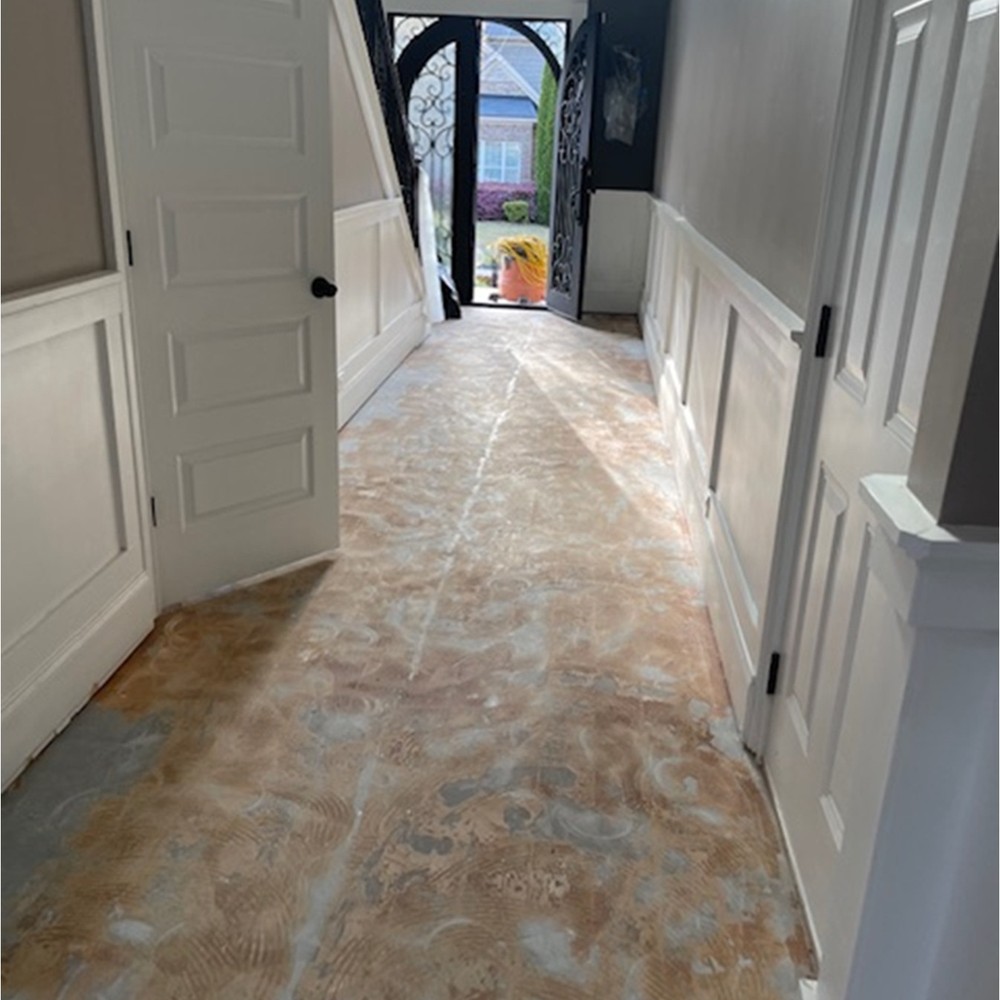
Carpet pad, soaked drywall, and other porous materials that absorbed floodwater are cut out and disposed of properly, with each item photographed and logged for your claim before it leaves the house.
Step 4: Cleaning and Sanitization
Every surface the water reached is cleaned and treated with antimicrobial solutions to address the bacterial contamination floodwater leaves behind.
Step 5: Drying and Moisture Verification
Air movers and dehumidifiers run until framing, subfloor, and remaining drywall return to normal moisture levels, confirmed with daily meter readings rather than a glance and a guess.
Why Choose Viking Restoration for Flood Damage Restoration in Duluth, GA
- 24/7 emergency pump-out and extraction, every day of the year
- Safe handling of contaminated category 3 floodwater
- Full documentation — photos, moisture logs, and itemized losses — for your adjuster
- Professional-grade pumps, extractors, and drying equipment
- Licensed and insured, locally owned and operated in Duluth
- Serving Gwinnett, Cobb, and DeKalb counties across Metro Atlanta
Standing floodwater gets more expensive by the hour, and wading into it is not worth the risk. If your home is taking on water anywhere from Norcross to Peachtree Corners — or anywhere else in Metro Atlanta — call Viking Restoration at (470) 567-1284 for emergency pump-out, or send us a message and we will call you back. One note for your claim: flood losses are handled differently by different policies, so start the paper trail early — we photograph and log everything from the first visit so you and your adjuster have what you need.